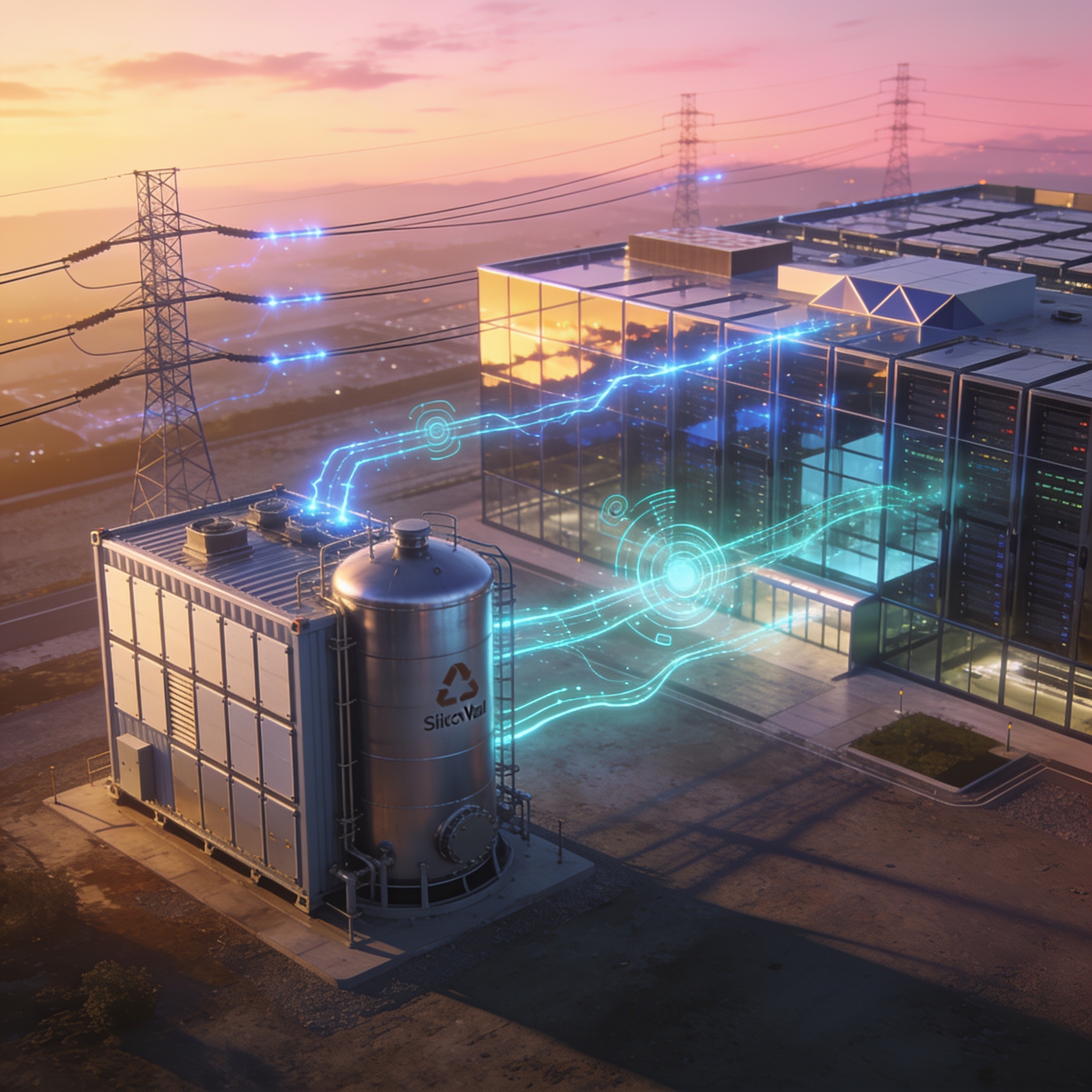
The Nuclear Renaissance in Silicon Valley: Why Tech Giants are Betting on Small Modular Reactors (SMRs) to Power the AI Revolution
How SMRs address data-center power, reliability, and emissions for AI workloads — technical, economic, and operational considerations for engineers.
The Nuclear Renaissance in Silicon Valley: Why Tech Giants are Betting on Small Modular Reactors (SMRs) to Power the AI Revolution
AI workloads have changed the energy calculus for hyperscalers and large cloud providers. Model training, inference farms, and specialized accelerators drive power density and continuous demand that strain local grids and sustainability goals. The response from some technology companies is unexpected to many engineers: direct investment in small modular reactors (SMRs) and advanced nuclear options.
This post explains the technical reasons behind the trend, how SMRs fit into data-center architecture and site operations, the economics and permitting hurdles, and a pragmatic engineer’s playbook for evaluating SMR-backed designs. Expect concrete trade-offs, an example sizing snippet, and a checklist you can use when talking to energy partners.
Why AI changes the energy equation
Power density and 24/7 load
Modern AI clusters run GPUs and accelerators with much higher sustained power than traditional CPU farms. Two characteristics matter:
- High sustained PUE-sensitive draw: AI jobs often run 24/7 at high utilization, reducing the elasticity that helped balance power across time.
- Localized power density: Racks of accelerators concentrate heat and power, pushing site transformer and cooling designs to new limits.
Result: Data centers hit capacity limits not because of floor space, but because of available, reliable, and low-carbon megawatts.
Grid constraints and resilience
Many tech hubs face transmission bottlenecks or long interconnection lead times. For companies that need predictable power for multi-year model runs, utility uncertainty becomes a project risk. Backup diesel generators solve resilience but fail sustainability and lifecycle-cost goals.
SMRs promise deterministic, low-carbon baseload close to the load center, addressing both capacity and reliability concerns.
What are SMRs and why they fit data-center needs
SMR fundamentals
Small modular reactors are nuclear fission plants with lower individual unit capacity (tens to a few hundred MW) and modular, factory-built components. Key features relevant to data centers:
- Compact footprint relative to gigawatt plants.
- Factory fabrication shortens on-site construction time and improves quality control.
- Potential for long refueling cycles and high capacity factors (>90%).
Technical match to data centers
- Baseload stability: SMRs provide continuous power suited to long-running training workloads.
- On-site or near-site placement: Reduces transmission losses and avoids long interconnection queues.
- Reduced carbon intensity: Helps meet aggressive emissions targets without relying solely on intermittent renewables and batteries.
Integration patterns: how tech companies are approaching SMRs
Three integration archetypes are emerging:
- Colocated SMR plus data center: Reactor and data center on a single campus, sharing substations and microgrid controls.
- Behind-the-meter SMR: Power generation dedicated to a specific customer’s meter with islanding capability.
- Grid-interactive SMR: Plant feeds the local grid with firm capacity and uses contracts/hedges to allocate energy to the data center.
Each pattern has different operational, legal, and safety implications. Colocation gives the most direct resilience and latency benefits but also concentrates regulatory and security requirements.
Economics and regulatory paths
Cost drivers
- Capital cost: SMRs reduce per-unit construction risk but still require significant capital outlay compared to conventional diesel or gas peaker plants.
- Levelized cost of energy (LCOE): For continuous AI loads, LCOE from SMRs can be competitive when you factor in avoided interconnection costs, carbon pricing, and the cost of large-scale battery capacity needed for equivalent firm capacity from renewables.
- Financing and amortization: Tech firms can structure power purchase agreements (PPAs), joint ventures, or direct ownership to optimize tax and balance-sheet treatment.
Permitting and community considerations
Nuclear projects must address safety, emergency planning, and public perception. SMRs are often sited in previously industrial or utility-zoned areas to reduce friction. Expect multi-year licensing timelines that require early engagement with regulators and communities.
Technical challenges and the engineer’s playbook
Grid interop and controls
SMR integration requires robust plant-to-site controls and microgrid orchestration for black-start, frequency support, and load-following if desired. Engineers should design control layers with clear separation of responsibilities between the reactor operator and the site.
Thermal management and waste heat reuse
SMRs produce usable thermal energy. Data-center cooling may reuse low-grade heat for absorption chillers or district heating, improving overall plant efficiency.
Security and safety engineering
On-site nuclear assets introduce physical and cyber security requirements beyond typical data-center controls. Expect coordination with national regulators and stricter access protocols.
Example: quick power estimate model
Below is a compact Python-style estimator to convert GPU counts into rough site power and to estimate whether an SMR of a target size is a sensible fit. Use this as a starting point for capacity discussions.
def estimate_power(gpus, tdp_per_gpu_kw=0.35, pue=1.2):
    """Estimate site electrical load in kW.
    gpus: number of accelerator cards
    tdp_per_gpu_kw: thermal/power draw per GPU in kW
    pue: power usage effectiveness
    """
    gpu_power = gpus * tdp_per_gpu_kw
    it_load = gpu_power
    infrastructure_overhead = it_load * (pue - 1)
    total_site_kw = it_load + infrastructure_overhead
    return total_site_kw

# Example usage
# 10,000 GPUs at 0.35 kW each -> estimate total site kW
print(estimate_power(10000, 0.35, 1.25))
Interpreting the result: 10,000 accelerators at 0.35 kW and PUE 1.25 yields tens of megawatts of continuous demand. A single SMR in the 50–300 MW range can comfortably serve multiple such campuses or a hyperscale site with tens of thousands of accelerators.
Operational considerations and data-platform impacts
- Maintenance windows and refueling cycles must align with long-running training schedules. Plan for periodic load reductions or temporary grid support during refueling.
- Contracts should codify availability SLAs for power; a small plant outage in a colocated reactor is a different operational risk than a utility blip.
- Monitoring and telemetry integration: Reactor operators will have separate control systems. Build cross-domain dashboards for capacity, thermal reuse, and grid interactions.
Case studies and strategic rationales (brief)
- Direct ownership: Some firms opt to buy capacity to lock marginal costs and control resilience.
- PPAs with advanced nuclear vendors: Others contract energy from an SMR operator to avoid capital exposure while securing firm, low-carbon power.
- Joint ventures with utilities: Share permitting, grid ties, and responsibilities while accelerating timelines.
Summary and engineer’s checklist
- Evaluate load profiles: Are your AI workloads continuous enough to leverage baseload SMR economics? Use the estimator above.
- Map interconnection pain points: Long queues and transmission constraints increase the value of near-site generation.
- Assess thermal reuse: Can waste heat improve plant economics via absorption chilling or district heating?
- Engage early with regulators and communities: Nuclear projects require time and social license.
- Define operational separation: Clarify controls, safety boundaries, and SLAs between reactor operator and site operator.
- Plan security holistically: Physical, cyber, and personnel security will be more stringent.
- Model financing: Compare direct ownership, PPA, and JV structures for risk and cost.
Checklist (quick):
-
- Run power-profile estimates for anticipated GPU scale.
-
- Quantify avoided interconnection and battery costs.
-
- Identify candidate sites for colocation or behind-the-meter setups.
-
- Start regulatory outreach and community engagement.
-
- Prototype thermal-reuse options with facilities teams.
-
- Draft operational playbooks for outage and refueling scenarios.
The shift toward SMRs in Silicon Valley is not a fad: it’s a rational response to a new class of persistent, high-density electrical demand combined with aggressive decarbonization goals and supply constraints. For engineers, the task is to translate nuclear plant characteristics into data-center reliability, controls, and lifecycle economics. The core question to keep asking is simple: for continuous, high-density AI loads, what combination of generation, storage, and grid contracts minimizes total cost of ownership while meeting resilience and sustainability targets? SMRs are now a realistic entry in that optimization space.